
What Really Damages Car Paint During the Monsoon?
Learn what really damages car paint during the monsoon in India. Discover how moisture, acidic contaminants, hard water, humidity, and improper maintenance affect your car's finish.
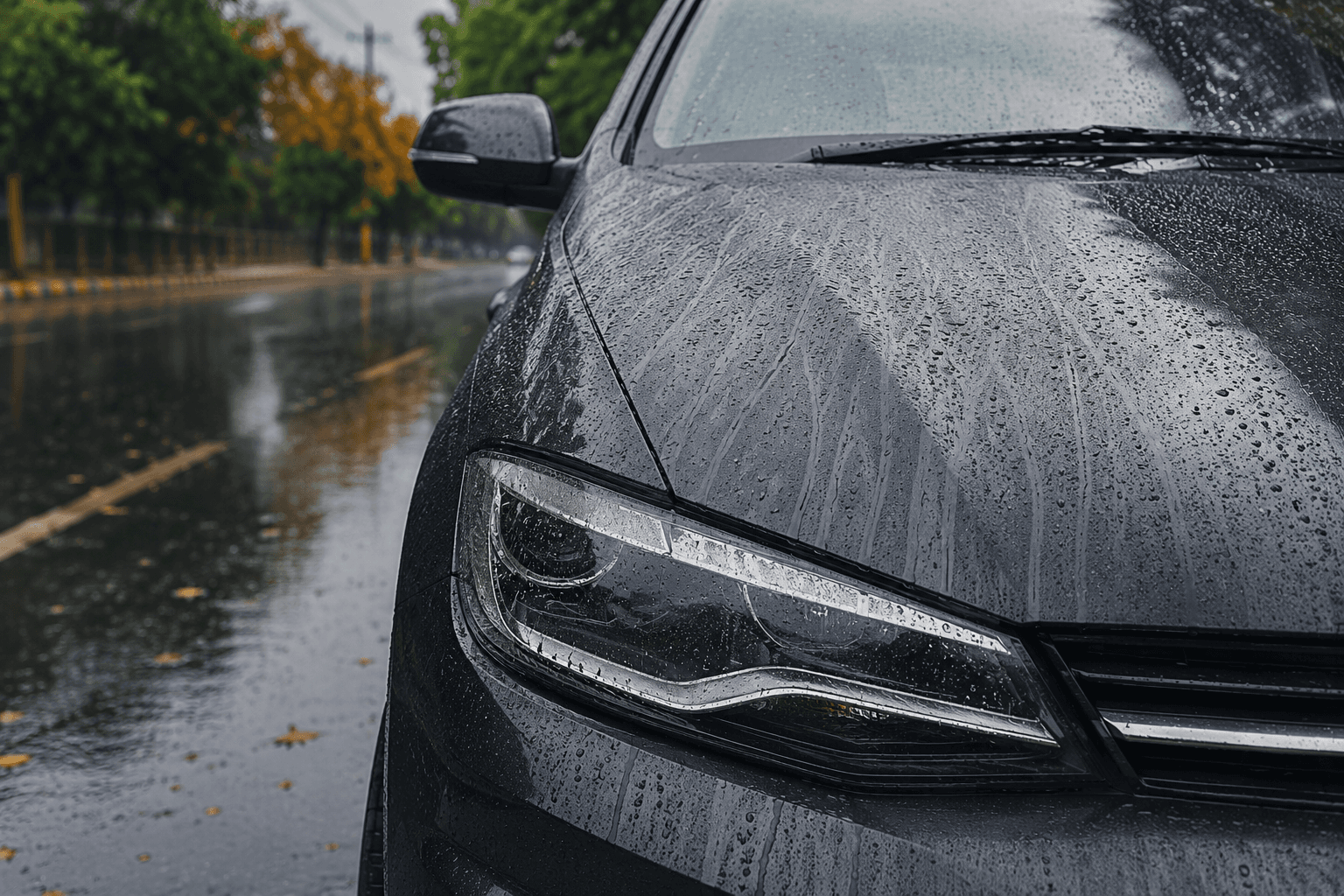
What Really Damages Car Paint During the Monsoon?
Many people assume rain is what damages car paint during the monsoon. It isn't.
Modern automotive paint is designed to withstand normal rainfall. The real damage happens after the rain, when moisture combines with pollution, mineral deposits, UV exposure between showers, and poor maintenance habits. Together, these factors slowly attack the clear coat, reducing gloss and making the paint more vulnerable over time.
Whether you drive in Ahmedabad's dusty conditions or Kochi's humid coastal climate, understanding these risks can help you protect your vehicle throughout the rainy season.
Why Rainwater Alone Isn't the Problem
Rainwater is usually not aggressive enough to damage factory paint by itself.
The problem is that rain absorbs airborne pollutants before it reaches your vehicle. Once it lands on the surface, it mixes with dust, industrial particles, and organic contaminants already sitting on the paint.
As the water evaporates, these contaminants remain behind. Repeated exposure without proper cleaning gradually dulls the clear coat and makes future contamination easier to stick.
High Humidity Keeps Moisture on the Paint Longer
One of the biggest differences between summer and monsoon is humidity.
During humid weather, water doesn't evaporate quickly. Instead, moisture remains trapped on the paint for longer periods.
This extended contact gives contaminants more time to interact with the clear coat. It also makes it easier for mineral deposits and airborne pollutants to settle onto the surface.
In coastal cities like Kochi, consistently high humidity means vehicles often stay damp long after rainfall has stopped.
Hard Water Spots Become More Common During the Monsoon
Many owners wash their vehicles after every rainy drive.
While washing is good practice, allowing hard water to dry naturally creates another problem.
Water supplied in many parts of India contains dissolved minerals such as calcium and magnesium. As the water evaporates, these minerals remain on the paint as visible spots.
If ignored for weeks, these deposits can become increasingly difficult to remove and may require professional paint correction.
This is particularly relevant in cities where hard water is common, including many areas across Gujarat.
Acidic Contaminants Can Affect the Clear Coat
Rain can carry more than just water.
Industrial emissions, vehicle exhaust, construction dust, and other airborne pollutants dissolve into rainwater before it reaches your car.
Most rainfall today is not strongly acidic enough to immediately damage modern paint. However, repeated exposure to contaminated rainwater combined with poor maintenance can gradually affect the clear coat's appearance.
This is why leaving a vehicle unwashed throughout the monsoon often results in paint that looks dull by the end of the season.
Temperature Changes Stress the Paint Surface
Monsoon weather isn't consistently cool.
A typical day may include heavy rain followed by bright sunshine only a few hours later.
These rapid temperature changes cause the paint surface to repeatedly heat up and cool down. While modern automotive finishes are engineered for this, constant expansion and contraction, combined with contamination sitting on the surface, accelerates the ageing of neglected paint.
Vehicles parked outdoors experience this cycle almost every day during the rainy season.
Improper Washing Causes More Damage Than the Weather
Ironically, one of the biggest causes of paint damage during the monsoon is the way people wash their cars.
Frequent washing is beneficial only when done correctly.
Using dirty cloths, household detergents, excessive pressure, or allowing the vehicle to air dry with hard water can introduce swirl marks, water spots, and unnecessary wear on the clear coat.
Good washing technique is often more important than washing frequency.
Does Paint Protection Reduce Monsoon Damage?
Paint protection cannot stop the rain, but it can reduce how easily contaminants bond to the surface.
Paint Protection Film acts as a physical barrier between the environment and your vehicle's original paint, helping absorb everyday impacts while reducing direct exposure to contaminants.
Ceramic coating creates a hydrophobic surface that allows water to bead and makes routine cleaning easier.
Neither product eliminates maintenance. Regular washing and proper drying remain essential throughout the monsoon.
How to Protect Your Car During the Monsoon
A few simple habits can significantly reduce paint deterioration during the rainy season.
- Wash the vehicle regularly instead of waiting until heavy dirt builds up.
- Dry the paint completely after every wash.
- Remove hard water spots before they become permanent deposits.
- Avoid parking under areas where contaminated water drips continuously.
- Inspect the paint every few weeks for early signs of contamination.
- Consider professional paint protection before the monsoon begins.
Consistent maintenance is far easier than restoring neglected paint after the season ends.
Final Thoughts
The biggest threat to your car's paint during the monsoon isn't rain itself. It's the combination of prolonged moisture, humidity, hard water, airborne pollution, and incorrect maintenance that gradually wears down the clear coat.
Understanding these factors allows you to prevent damage instead of correcting it later. With proper washing habits and the right protection, your vehicle can retain its finish throughout the rainy season, whether you're driving through Ahmedabad or Kochi.