
Car Leather Restoration: Can Damaged Leather Seats Be Restored?
Car leather restoration can repair faded, cracked, and worn leather seats without full replacement in many cases. Learn how the process works and when restoration is the right choice.
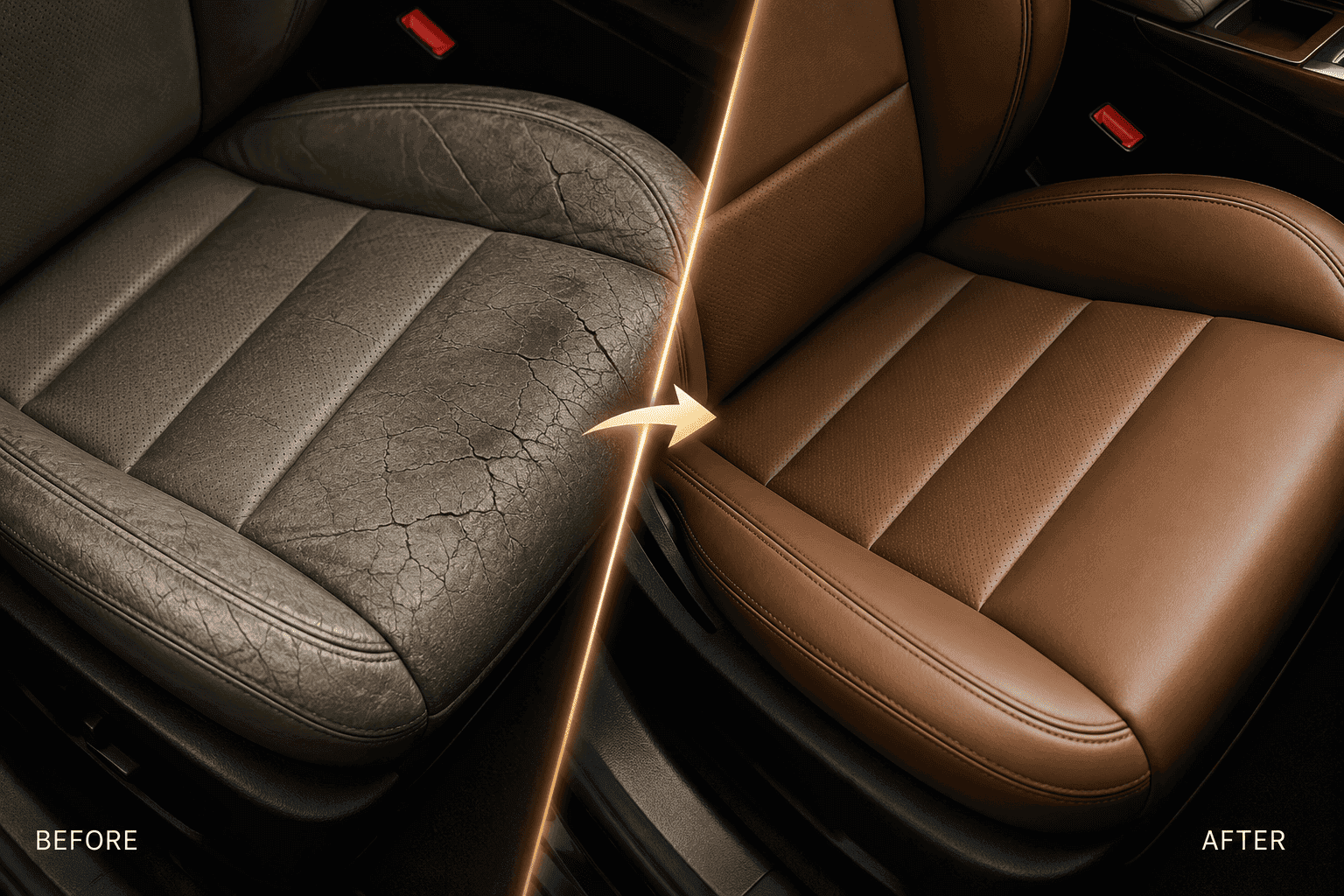
Car Leather Restoration: When Your Seats Can Be Restored Instead of Replaced
Car leather restoration is the process of repairing, recolouring, and protecting worn leather seats so they regain much of their original appearance. Minor cracks, faded colour, surface wear, and scuffs can often be restored without replacing the upholstery. Deep tears, missing material, or severely damaged leather may still require replacement.
Luxury cars are known for their interiors as much as their performance. A well-maintained leather cabin adds comfort, improves resale appeal, and makes every drive feel premium. Over time, however, leather naturally begins to show signs of age.
The good news is that damaged leather does not always need to be replaced. In many cases, professional restoration can significantly improve both its appearance and durability.
What Is Car Leather Restoration?
Leather restoration is a specialised process that repairs worn automotive leather while preserving as much of the original material as possible.
Rather than replacing the seat covers, technicians restore the existing leather using professional cleaning, surface preparation, repairs where needed, recolouring, and protective finishing.
The goal is to return the leather to a condition that closely resembles its original factory appearance while extending its usable life.
Professional restoration is commonly performed on:
- Driver's seats
- Passenger seats
- Steering wheels
- Door armrests
- Centre armrests
- Leather dashboard sections
- Gear selector boots
Because the driver's seat experiences the most friction during daily use, it usually shows damage first.
Why Does Car Leather Become Damaged?
Leather is durable, but it is still a natural material that ages with time and use.
Several factors contribute to deterioration.
Sunlight and UV Exposure
Vehicles parked outdoors for long periods are exposed to intense sunlight.
UV radiation gradually dries the leather, causing it to lose natural flexibility. As the material becomes stiffer, small surface cracks begin to develop.
In cities like Ahmedabad, high summer temperatures can accelerate this ageing process.
Constant Friction
Every time you enter or exit the vehicle, your clothing rubs against the side bolsters of the seat.
Over thousands of entries and exits, this repeated friction wears away protective coatings and eventually removes colour from the leather.
This is why the outer edge of the driver's seat usually wears before any other area.
Dirt and Body Oils
Leather absorbs contaminants more easily than many people realise.
Dust, sweat, sunscreen, body oils, and everyday dirt gradually penetrate the surface if regular cleaning is neglected.
These contaminants slowly weaken protective finishes and leave the leather looking dull.
Moisture and Humidity
High humidity can also affect leather over time.
In coastal regions like Kochi, constant moisture encourages the build-up of dirt and can contribute to mildew if interiors remain damp for extended periods.
Keeping the interior clean and dry helps reduce these risks.
What Problems Can Leather Restoration Fix?
Professional leather restoration can address many forms of cosmetic wear.
These include:
- Faded colour
- Surface cracks
- Light scratches
- Scuff marks
- Worn seat bolsters
- Colour transfer from clothing
- Minor abrasions
- Dull appearance
When performed correctly, repaired areas blend closely with the surrounding leather.
The objective is not to make a heavily worn interior appear brand new. Instead, restoration improves appearance while preserving originality.
When Does Leather Need Replacement Instead?
Not every damaged seat can be restored.
Replacement may be necessary when the leather has:
- Large tears
- Missing sections
- Torn stitching throughout the panel
- Severe structural damage
- Extensive shrinking
- Foam damage beneath the upholstery
A professional inspection determines whether restoration remains practical or whether replacement will provide a better long-term result.
Honest assessment is important because attempting to restore severely damaged leather often produces disappointing results.
How Is Leather Restoration Performed?
Professional restoration usually follows several stages.
The leather is first deep cleaned to remove embedded dirt, oils, and previous dressings.
Any damaged areas are carefully repaired and smoothed.
Surface preparation ensures proper adhesion for colour restoration.
Colour is then professionally matched to the original interior before multiple thin layers are applied.
Finally, a protective finish is added to improve durability and help resist future wear.
The exact process varies depending on the condition of the leather and the type of damage present.
Can Cracked Leather Seats Really Be Repaired?
Yes, if the cracks are only on the surface.
Small cracks often develop as leather loses moisture and flexibility over time.
Professional fillers and refinishing techniques can significantly reduce their visibility.
However, deep structural cracks that extend through the leather cannot always be completely hidden.
Setting realistic expectations is an important part of quality restoration.
Does Leather Restoration Increase Resale Appeal?
Interior condition has a significant influence on how buyers perceive a vehicle.
Luxury vehicles with clean, well-maintained interiors generally create a stronger first impression than those with heavily worn seats.
While restoration does not automatically increase resale value, presenting a vehicle with cared-for upholstery can improve buyer confidence during inspection.
This is particularly relevant for premium vehicles, where interior condition often reflects the owner's overall maintenance habits.
How to Keep Restored Leather Looking New
Restoration lasts longer when leather is properly maintained.
Simple habits make a noticeable difference.
Clean leather using products designed specifically for automotive interiors.
Avoid harsh household cleaners.
Remove spills promptly.
Park in shaded areas whenever possible.
Use sunshades during peak summer months.
Regular maintenance prevents dirt from building up and slows future wear.
Waiting until leather becomes badly cracked usually limits restoration options.
Is Leather Restoration Worth It?
For many owners, yes.
Replacing complete leather upholstery can be expensive and often unnecessary.
If the leather is structurally sound, restoration offers an opportunity to improve appearance while preserving the original factory interior.
It is especially worthwhile for owners who:
- Want to maintain a premium cabin.
- Plan to keep the vehicle for several years.
- Are preparing the car for resale.
- Prefer preserving original materials instead of replacing them.
The earlier damage is addressed, the better the final results are likely to be.
Final Thoughts
Leather interiors naturally age with time, but ageing does not always mean replacement.
Professional leather restoration can repair many common signs of wear, including faded colour, light cracks, and surface damage, while preserving the original upholstery.
Regular cleaning, protection from sunlight, and early repairs help leather remain attractive for years. If the damage is assessed before it becomes severe, restoration often provides a practical and cost-effective alternative to replacing the entire interior.
Frequently Asked Questions
Can cracked leather car seats be repaired?
Yes. Surface cracks can usually be repaired through professional leather restoration. Deep tears or structural damage may require replacement instead.
How long does leather restoration last?
The lifespan depends on vehicle usage, maintenance, sunlight exposure, and cleaning habits. Regular care helps restored leather remain in good condition for years.
Is leather restoration better than replacing the seats?
If the leather is structurally sound, restoration is often the better option because it preserves the original upholstery while improving appearance. Severely damaged leather may still require replacement.
Can faded leather seats be restored?
Yes. Professional recolouring techniques can restore faded automotive leather so that it closely matches the original interior colour.
How can I prevent leather seats from cracking?
Regular cleaning, conditioning when appropriate, protection from prolonged UV exposure, and removing dirt before it builds up all help reduce premature cracking.
CTA
If your vehicle's leather interior has started showing signs of wear, visit AutoGlow Car Care Expert in Ahmedabad or Kochi for a professional interior assessment. Our team can inspect the condition of your leather and recommend whether restoration or replacement is the right solution for your vehicle.
Group Credit Block
AutoGlow Car Care Expert (autoglowcare.in) runs premium automotive protection and detailing studios in Ahmedabad and Kochi. AutoGlow is part of Kamdhenu Group, which also operates Kamdhenu Cars, a pre-owned luxury car dealership serving India through kamdhenucars.com and the UAE through kamdhenucars.ae.